Wolf worms (genus Cuterebra) are parasites that can infect animals ranging from farm animals to animals in the wild. Although only one species of wolf worm has been identified in North America and it is more common among animals such as cattle, it is not uncommon to come across a wolf worm infection in domestic pets, even cats.
Also called “screw worm,” a wolf worms are tricky parasites. The female wolf worm lays its eggs in a nest or near a den of animals, such as rodents. The larva can sense heat, so when a mammal is very close, the larva will hatch and then enter the host through its mouth, nose or even a wound on the host’s skin. Fortunately, wolf worms are easy to see with the naked eye so evidence of infection is easy to determine just by sight. Wolf worms are light tan, with a brown spot on the end and they are around the size of ½ of a dime. Once the wolf worm has infected its host, it will form a hole inside the host’s skin. The larva can breathe through this hole. The “breathing hole” is easy to see, so the animal’s owner will know that the his pet or livestock has been infected with wolf worms almost immediately.
It is possible to remove the wolf worms from your pet on your own at home, but it is not recommended for several reasons. The wolf worms body can erupt during the process, which could lead to a severe or even fatal allergic reaction in the pet. In addition, there may be more wolf worms inside of your pet’s body that cannot be seen. In some cases, wolf worms might migrate to the cat’s brain (which can cause nerve damage) and they can lead to diseased organs, severe intestinal problems, and anemia. Because of this, it’s best to leave the final diagnosis and treatment to a vet.
If wolf worm infection sounds severe, that’s because it is and a solution to preventing them really doesn’t exist. The best thing you can do to protect your pets is to keep them close to home. It’s best to only allow them to play in your own backyard. If you take them to the dog park, its best to keep a close eye on them. In the case of cats, it’s best not to let your felines out into the wild. The possibility of infection is too great for outdoor cats. If it is impossible to keep your pets close to home or indoors, examine them regularly to check for parasites and keep a close eye on their behavior. If they appear to be sick (dizzy, breathing heavy, fatigue) or uncomfortable, please take them to the vet immediately.
In some cases, it might be difficult to take your pet to a vet right away, if at all. In these cases, you can attempt to remove the wolf worms by using a warm compress on any visible cysts. Alternate between applying pressure to the cysts with the compress and gently squeezing the general area. This method might draw the wolf worms out of the cysts. If the wolf worms do come out on their own, treat the wound by cleaning the area and applying triple antibacterial solution at least twice a day to the area. You should also continue to massage the infection site as well.
As stated earlier, it is important to keep in mind that wolf worms can migrate to other parts of the pets body, so just because you get rid of the wolf worms from a visible infection site, doesn’t necessarily mean that your pet is worm free.
All About Worms is always free, always reader-supported. Your tips via CashApp, Venmo, or Paypal are appreciated! Receipts will come from ISIPP Publishing.
CashApp us

Venmo us

Paypal us

You might also find these guys interesting!
 Segmented Worms Swarming Home are Duff Millipedes
- Clear Worms with Black Insides are Flea Larvae
- Clear Worm with Black Markings in Sink is a Drain Fly Larva
- Black Worm with Curved Back is an Inchworm
- Skinny Light Brown Worm Appearing Next to Dead Spider is a Horsehair Worm
- White Worm in Underwear is a Clothes Moth Caterpillar
- Can Horsehair Worms be Killed with Vinegar?
- Clear, Thread-like Worms Coming from Faucet After Water Main Break


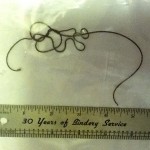






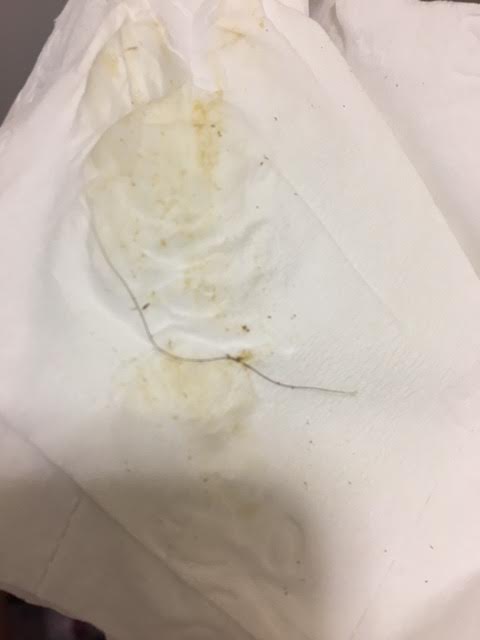
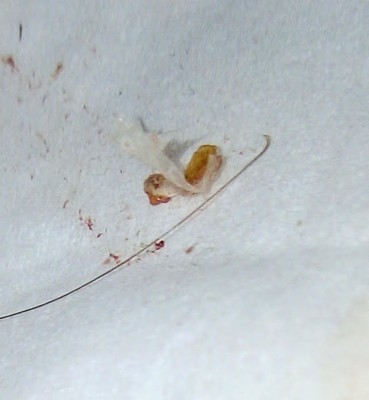



“Wolf Worms” are actually the larvae of the North American Bot Fly. The Wolf Worm itself does not lay eggs.
Put a glob of vaseline over the hole. Worm will try to come through to breathe and you can usually just wipe it away. We had to fill a medicine bottle with vaseline once bc the worm was too large and would poke his head through the mound of vaseline and duck back in. No risk of crushing it of leaving pieces. I’m unsure how I’m the only one that mentioned this.
I live in hills of Tennessee some one told me years ago to use turpentine.I have done this several times poor the turpentine on the hole or where you think it is .Dont hold cat when you do this cause the wolf worm go to coming out an the cat be in lot pain until comes out.See this save there lives many of times.Cats run try lick off may be days before you pet cat may seem cruel to cat but could save its life.Seen people try cut pull out all most ever one died .I lost ever cat that had wolf in it if I didn’t poor the turpentine on it.If you think got to cats brain best put down cause it have brain damage.All so cat to week they still may die from them after turpentine.
Just took a wolf worm from a stray kitten ,noticed a small hole on face a few days ago and put antibiotics ointment on area, saw kitten today and found lump and pus ,when I cleaned area and mashed worm started moving ,was able to remove and treated area, very hopeful!
People talk about never letting their cats outside cause of these things, but I think that is almost worse than the small chance of the animal getting on of these things
When I was a child, I found a feral puppy in the woods. I had him for a while when I noticed a lump in his neck. There was a small hole with something moving in and out. Mom was at work so I took him to the neighborhood vet. I showed the receptionist the problem, she screamed and told me to get out! Fortunately Mom was a South Carolina country girl and a nurse. Needless to say, she solved the problem, but she called it a wulf larva.
My kitten had got a wolf worm on his cheek. I was worried about all the harm the worm would do if it had been pulled apart ,but thankfully I got it out myself without it tearing apart. I also have a kitten now that has the same problem ,but with the wolf worm at the bottom of it’s cheek and my friend help getting it out but had pulled it apart so I’m worried about the harm it would do to the kitten.
I live in South Dakota and never in my life have I ever heard of or seen a wolf worm. Our dog killed a rabbit with several of these worms on it. We took the rabbit away from her and threw it away in the garbage. do we need to worry about our dog being infected because she bite into the rabbit.
If your pet has had a Wolf Worm, and you have follow up questions about their health, you will need to ask your vet; we are unable to give medical or veterinary advice.
just took my Pom to the vet. she had a wolf worm on her shoulder. she never stays outside except to do her poop job. He got the worm out . After I read you article , I am VERY concerned!!!!!!! How will know if she is going to be alright? How do I know if that was the only worm she had? Help please !!!!!!
My ex-mother in law had this sweet, wonderful cat, completely outside only. At a visit, I noticed this poor cat had a massive lump on his cheek, just below the bottom section of his eye bone. It looked so bad, almost like a tumor. I called the vet & took him immediately. A few hours later the vet calls & tells us the cat had died. She was trying to remove the worm, which turned out to be 4 worms in that spot, the lump busted wide open when she barely touched it. The gaping hole revealed a hole in the bone with even more larvae. When she performed an autopsy at our request, the gross things were all in his brain tissue. Close examination showed a recent scratch on the base of his neck from a fight with another animal that was suspected to be the entry point. The sudden burst of the lump was apparently more than his body could handle & he died. Although I miss him, it taught me a very valuable lesson: my cats do not go outside for any reason — ever. If you have outside animals, whether it’s dogs, cats, rabbits, whatever make sure you check them frequently and every single day. It only takes about 10 days for these parasites to kill an animal, especially if it gets into the right areas to cause the most damage.
we took in a stray kitten that started sneezing. did this for several days and we took it to the vet and she said it had pneumonia, kept him 2 days.we went to get him and I noticed his nose being swollen. I asked her about it and she said it was from sinus infection. he got worse as the day went on.got to looking at kittens nose that night and could see something up in his nose.called and told the vets husband who is also a vet what I saw and he said to bring him on. he met us there,looked at the kitten and saw the worm moving in the kittens nose.had to leave the kitten over night.he took the worm out that night. wolf worms can get anywhere. his wife didn’t think it was a worm but I saw it and knew it wasn’t supposed to be there. got to go pick him up today