Army worms are turf and crop feeders, which makes them a serious pest for many homeowners and commercial growers. Like most caterpillars, army worms have voracious appetites. Before they turn into moths, these worms can destroy a beautiful landscape or an entire field.
When army worms attack, they feed on grass shoots and are particularly fond of bermuda. They can eat their way across an entire lawn in as little as three days. The early larval stages are often difficult to detect, as army worms burrow into the soil during the day. At their largest, they may reach lengths of two inches, which makes them easier to spot and more difficult to eradicate. Severe infestations are often described as a “writhing, moving lawn.” The grass can literally appear to be in motion with concentrations of as many as 150 army worms per square foot.
Army worms do their dirty work at night and retreat to rest when the sun rises. On lawns, yellowed circles may begin to appear. For early-growth crops, the damage can mimic other diseases. It is often too late for crop owners to gain control, once the army worms are detected. In many cases, the entire field must be defoliated. Typically, the population will dissipate within two weeks and planting can start again. Residential turf will also recover from mild infestations at about the same rate.
These worms prefer a warm, moist climate. They are increasingly found throughout the U.S. and Canada, as well as Russia, Australia, and Africa.
The army worm moths are a neutral gray-to-brown in color. They do no damage as adults, other than lay eggs for the next generation of feeders. When overpopulation occurs in warmer climates, adults migrate north. Egg-laying occurs in late May or early June. Females deposit the eggs on leaf undersides or sprigs of grass. Damp, protected areas are choice sites.
At just over a week, the eggs hatch and the caterpillars begin feeding. This stage will last up to one month. If food becomes scarce, the growing worms will advance like an “army” to continue foraging.
When conditions are right, farmers and homeowners may experience a fall invasion. The army worms become a nuisance in late August and generally feed on seedling crops including wheat, hay, grain sorghum, soybeans, and fescue. Cotton and corn fields are also prime targets. They can continue to do damage until a hard “killing” frost. In the Southeastern U.S., army worms are often migrants from South and Central America.
Insecticides can be applied successfully in the very early stages of an invasion, and before the army worms reach one-half inch in length. Once they grow, however, they become resistant to chemical applications. Treatments are applied at dusk before the army worms emerge to begin feeding.
All About Worms is always free, always reader-supported. Your tips via CashApp, Venmo, or Paypal are appreciated! Receipts will come from ISIPP Publishing.
CashApp us

Venmo us

Paypal us

You might also find these guys interesting!
 Insect Larvae the Length of an Eyelash Found on Arms
- Segmented Brown Worm on Kitchen Counter is a Superworm
- White Worm in Underwear is a Clothes Moth Caterpillar
- Slimy Creatures Regurgitated by California Kingsnake Could be Snails
- Small Black Worms Swarming Home Office are Inchworms
- Can Carpet Beetle Larvae Bite People?
- Mangled Red Worm in Toilet is a Tiger Worm
- Branch-like Caterpillar in Cottonwood is an Ilia Underwing Moth Caterpillar

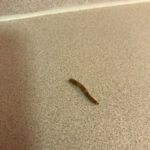
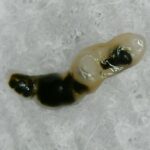




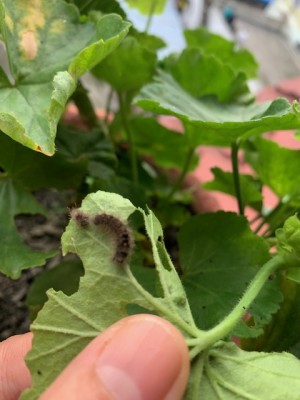



what months do they come
Yes, your lawn regenerates because army worms are primarily leaf eaters. They do not pay much attention to the roots. So as long as germination conditions are favourable, your lawn will regenerate.
Yes, your lawn regenerates because army worms are primarily leaf eaters. They do not pay much attention to the roots. So as long as germination conditions are favourable, your lawn will regenerate.
Does your lawn come back after the damage or do you have to replant in the spring?
Does your lawn come back after the damage or do you have to replant in the spring?